Episode Transcript
[00:00:00] Speaker A: Foreign.
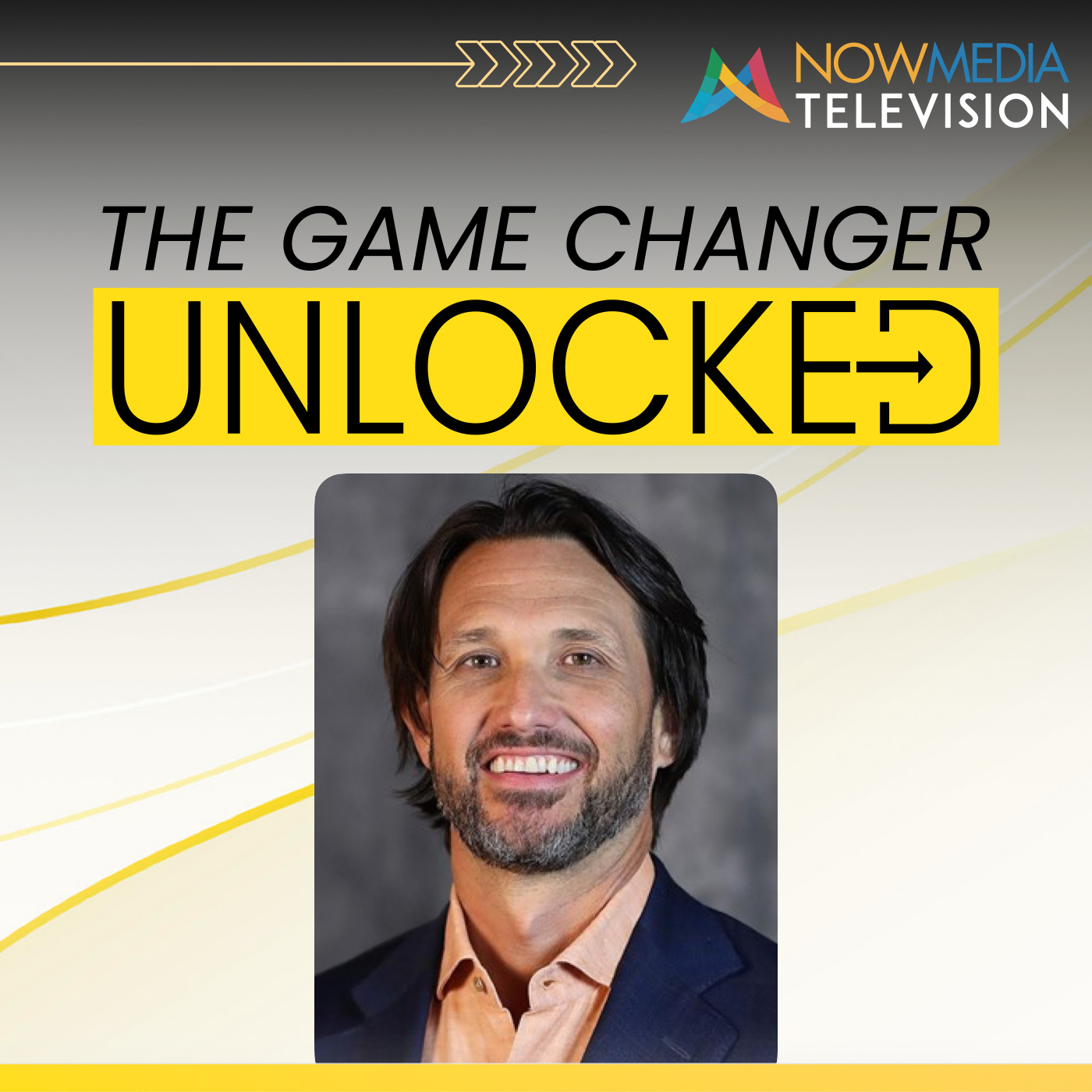
[00:00:06] Speaker B: Welcome back to the Game Changer Unlocked. I'm your host Brian Fetzer and today we're diving into a truly fascinating journey. One that moves from award winning music production into the fast paced world of startups. Our guest Darius Fong is a two time Grammy award winning producer who transformed from the recording studio into the tech arena event, eventually becoming the founding partner of Runtech Club, a human accelerator redefining how early founders gained momentum, clarity and product market fit. He was raised in Hong Kong, shaped by athletics and music. Now leading one of the most innovative founder communities in the world, Darius brings a perspective grounded in discipline and creativity and experimentation.
Darius, welcome to the show.
[00:00:54] Speaker A: Thanks for having me, Brian.
[00:00:56] Speaker B: Let's begin with this remarkable journey. Took a pivot and moved and really kind of changed everything. I mean today we're going to challenge many of creative professionals into feeling trapped into one identity, wondering if they're allowed to pivot into something maybe completely new. And many feel stuck with what they're always been doing or what they've always done and now what they're kind of dreaming next. So Darius, let's in plain words, why did you move from Grammy orienting music career into the startup world?
[00:01:35] Speaker A: Well, let's pause for a second. Right.
[00:01:39] Speaker A: Timing cannot be more perfect. We are now talking about AI.
We're talking potentially an AI bubble. Whether that's true or not.
No, you know, no predictions here, but if we remember back in 07 the iPhone came out first one and when I was in the music industry from 05 to 2010, that was like the most turmoil season for music industry as it was navigating, going really from CDs, records to iTunes being digitized and Spotify.
[00:02:20] Speaker A: It's really one of the scariest time to be in music.
For me it was actually the most exciting time to be in music because of all those changes. And I found myself, even with the success, working with an industry that was really driven by fear, unknown with all the uncertainties. But for me it was a natural transition to, to go into tech just because of where I was able to bring impact.
[00:02:51] Speaker A: I didn't have a choice. It was almost like I would have to turn my curiosity brain off, which I'm happy to share more as well.
[00:02:58] Speaker B: Was there a moment or a defining, you know, something that happened specifically or was it kind of that evolution over, you know, the period of time?
[00:03:09] Speaker A: It's a little bit of both.
But like I said, the iPhone was huge because it sort of unleashed a lot of opportunities.
[00:03:18] Speaker A: When I was working in studio at the Time I, you know, started just taking in reading, a lot of just learning about the business because of where the business was. And it really opened up my mind with the App Store. I myself ended up launching an app. There was nothing proprietary about the app, but what was interesting is it allowed me to meet a lot of people. It was basically a human curation music app where I got to speak to the people behind Guns n Roses, people behind, you know, lots of different music projects. And one person in particular, he was a few years ahead of me, went to Indiana University. His name was Ian Rogers and he was building a company called Topspin at the time.
He eventually became the CEO of Beats Music and then Apple bought that company.
He was very early in the digital music evolution.
I saw that other side of how to create impact.
So there was like a huge contrast between the two worlds. One side was, you know, let's just continue to hold on, to control, you know, let's keep things how it was. And for me, I've learned from the best, from a, from a classical engineering perspective. Got to work with tape, all that fun stuff. It was just time to go. That project ended up taking off, which led me to today, as well as starting my first official tech starts, open raising funds, all that good stuff.
[00:04:55] Speaker B: Well, one of the things, I think anytime you switch or pivot careers, and I can say this from a personal standpoint, sometimes you kind of lose that identity, that kind of use. It's kind of an unknown because you're going from one group of individuals you're around all the time to a different.
How was that like for you, kind of making that shift? I mean, because music is music and being in Southern California, I mean, that's kind of one of the epicenters.
[00:05:25] Speaker A: Honestly, taking on music was a huge risk. And me, as you mentioned, coming from Hong Kong, right, We have three career paths, a doctor, lawyer, or investment banker. And I chose none of those.
And so I, I've always been on the outside of mainstream in a sense, but I would say culture was the toughest part to navigate, or at least to understand.
The good news is being a part of music, the art form, and almost having little bit of street smart, right? Like just having to talk to and work with all sorts of people, understanding where they're coming from.
But the culture of going from just straight up music into more of the Silicon Valley culture was definitely a challenge for me to navigate. But ultimately it was really about just listening, understanding where they're coming from.
I mean, also at the time, Los Angeles was not the most robust startup ecosystem as well. And being taken seriously within that community was, you know, there was definitely a bit of a hurdle to overcome as well.
[00:06:35] Speaker B: When you're. We'll shift kind of back to the startup part. Is there any kind of things from the studio, habits, deadlines, feedback, teamwork that you still put into practice today as you talk to companies that are, that are building?
[00:06:50] Speaker A: Absolutely.
When you're in the studio, you have to be both extremely methodical.
Right.
Because it's physics. Right. When we talk about voltage, how do you measure decibels, all those, all those different components. And then on the other hand, you, you are working with something that's extremely creative and building a company is extremely unreasonable. Task is a daunting task to say, hey, I'm going to build something new and millions and hundreds of millions of people are going to adopt it. So really the discipline, which people don't talk about as much is, you know, the ability to test ab testing, going back and forth and being extremely methodical about.
[00:07:40] Speaker A: What needs to be tested, what needs to be validated, not just based on the hunch, although in the studio, lots of vibes as well. But I think really having the balance of two, the creativity, the art of launching something, but not forsaking the discipline, what it takes to get there.
[00:07:58] Speaker B: You mentioned a little earlier the iPhone and if you could send a text to the younger self, you know, one line before you made the pivot, what would it say? Have an idea?
[00:08:13] Speaker A: A few come to mind.
[00:08:15] Speaker A: The first one is ideas don't lead to success.
It's really carefully designed products that do.
[00:08:22] Speaker A: And the second one I sort of learned the hard way as a young self, ambitious, I would say really focus on the lessons along the way and really focus on people over success.
Not that I was like a biggest jerk, but definitely it's coming full circle. Right.
With how I'm currently supporting younger creatives and entrepreneurs as well.
[00:08:49] Speaker B: Have you found that the shift and what you're specifically doing now from the music industry, have you gained a work life balance? I think that's such a key for so many people. And I know in the sports industry there's really not much of it.
I can imagine the music is not much different.
[00:09:11] Speaker A: Yeah, balance is really tricky.
[00:09:16] Speaker A: I don't really like to talk about balance because there's seasons of life and there's different rhythm.
[00:09:22] Speaker A: But there's some. But I, I do think that building blindly or blind hustle, just hustle culture, like work harder and just push, push, push without some sort of measuring or Accountability and as well as understanding, hey, no one can ever be successful alone. It doesn't matter if you're, you know, single tennis player, you know, in a non team sport, doesn't matter.
So balance is really tricky question because to create a ton of impact, there really isn't much balance.
[00:09:57] Speaker A: If anything, there's constant movement. Right. But I think the awareness and just communication, for example, with your spouse, people around you and always focusing on people that you're serving does create a sense of, I wouldn't say equilibrium because equilibrium is actually boring, but it creates momentum that serves people around you and yourself as well.
[00:10:21] Speaker B: Man, Darius, it's fascinating kind of thought process and just seeing you kind of make that shift from one to another in a pivot in a career definitely.
[00:10:33] Speaker B: Takes a little bit of courage. For sure.
It's exciting to hear that.
[00:10:39] Speaker A: Yeah.
And if you think about my journey, I was a sprinter when I was really young and when I got into studio, became extremely unhealthy, used to working 17 hours a day, sometimes, you know, three months, three, three, six months.
And it was that sort of grind that did lead to success. Right.
But just understanding it was not sustainable. And so then later, how running comes full circle back into my life as well, has been really helpful to force some of those habits and daily routines and weekly routines back into my life. That's been a game changer.
[00:11:20] Speaker B: Well, I can tell you that coming up, we're going to dive into the Runtech Club itself and what it is, who it's for and why it's becoming one of the most exciting new models for early stage founders.
We will be right back with a Game Changer unlocked right after this.
[00:11:53] Speaker B: Welcome back to the Game Changer Unlocked. Want more of what you're watching? Stay connected to the Game Changer and every new NOW Media TV favorite live or on demand anytime.
Download the Free Now Media TV app on Roku or iOS for non stop bilingual programming in English and in Spanish on the move. Catch the podcast version anytime at NowMedia TV. From business and tech to leadership, culture and more. Now Media TV is streaming around the clock. Welcome back to the Game Changer Unlocked. We're here with Grammy award winning producer turned startup founder Darius Fong. In this segment, we shift from his personal pivot to the platform he created, the Runtech Club.
For so many early stage founders, the biggest challenge isn't talent, it's momentum.
They're overwhelmed alone and stuck in an endless planning. Instead of simple experiments, Runtech Club flips that completely. Using community structure and weekly data to Accelerate the real process.
Darius, I'm really excited to kind of take a little bit more of a dive into this segment.
You know, really kind of destigmatizing the early founders what they actually need and making more, a little more clarity, a little more feedback, a little more accountability, you know, from a pitch deck theater or perfection.
You know, your Runtech Club model is really unique in a lot of ways.
How would you describe what Runtech Club is and who is it for?
[00:13:40] Speaker A: Runtech Club is what we call a human acceleration. Specifically, we focus on continual acceleration and the person, the human that is behind the company.
And really the emphasis is clarity, moving forward in a way that is measurable, that can support them, actually compounding conviction.
[00:14:11] Speaker B: What gave you the idea for this specific model?
[00:14:19] Speaker A: Because it's definitely. I have a lot of empathy, yeah, I have a lot of empathy as a founder for other founders. And I see.
[00:14:27] Speaker A: On one hand there's just, with social media and just how information is being distributed, there's a lot of uncertainty, there's a lot of bad information out there as well.
That sounds good on, you know, when you, when you say it, but when you actually practice it, it doesn't really quite work and it doesn't have to be that way. So understanding the journey is actually much longer.
And there are so many amazing accelerators that you know, already exist that is 10, 15, 15 weeks. But they're highly selective. So what happens to, you know, every single year, like tens of thousands of amazing talents who are building something that they truly believe in. Right. So how can we help them navigate that belief, that vision? How do we help them validate or rethink? Right? So the faster we can get to some sort of clarity similar to game film or just, you know, as a coach, the better it is because everyone's actually moving towards something instead of just running around in circles.
[00:15:37] Speaker B: Walk us through a normal week for a member.
[00:15:42] Speaker B: That'S there.
[00:15:44] Speaker A: Yeah, run. Techclub has.
[00:15:49] Speaker A: Three major components. There's a technology layer that helps members run real world experiments.
So that's where you come up with ideas, specific hypothesis with some sort of roadmap that you can test towards your next milestone.
And that is something that they do on a week to week basis. But the true magic of it is that it's not just tech, it's the human component. So we provide physical spaces across four different cities, Los Angeles, Seattle, San Francisco and New York as hubs and people get to come connect with VCs, founders who've done it right, who are experienced as well as just advisors that come in, provide accountability, push you, challenge you a little bit, provide office hours.
And then we host a weekly run which is important to our community culture as well. And that is for more of a rhythm so that people can come and just stay accountable to their journey.
[00:17:02] Speaker B: The weekly run. I mean I know your background, you know, was in athletics.
What kind of came up with that weekly run as part of kind of a reset or kind of a normal process.
[00:17:16] Speaker A: I'm a runner for sure. But when it comes to startup or startups, you're trying to be scrappy.
[00:17:24] Speaker A: Running is one of those things that you really don't need too many resources and it's actually unstoppable. It's such a small thing, it's just movement. Right?
[00:17:32] Speaker B: Right.
[00:17:33] Speaker A: And running can mean something.
It could mean come and walk movement, it could mean community.
But something that simple, that addresses a core pain point which is just bringing people together and just being honest. Everyone's sweating, there's no ego. It sort of takes away the transactional part of venture, starts a building tech and just really gets to like what we want to talk about.
So that's how it started and Covid really helped propel that because there was no way for us to do board meetings, check ins.
And again, it was unstoppable. No one can stop you from getting together, being outside, moving. So that really took us to the next level.
[00:18:21] Speaker B: It's so fascinating. You mentioned weekly experiments.
What's an easy first experiment that somebody that's trying to get a startup going that they could try or is there any.
[00:18:36] Speaker A: Absolutely.
[00:18:39] Speaker A: You've heard this before. We've all heard this before. People talk about massive markets, total addressable markets, starting from a really bigger trend perspective and saying, hey, we have something amazing, right. It's not very actionable. So I always like to say is build a bike before you go fundraise for a car. Right. What do you have at your disposal now that will help you gain some insight even if it's not the perfect thing? Right. Just start here.
But with so many different things, like where do you really begin? Right.
So we distill that to three very simple components, which is what is the problem you're trying to solve? Like who exactly is it and how do you actually show up for these people?
Not every problem has market demand.
[00:19:27] Speaker A: And a lot of times making them bite size. Again the bike analogy, right? How can you start to move forward?
So.
[00:19:36] Speaker A: A simple example would be homelessness is a huge global trend.
But you can say, hey, what about foster kids who Age out of the system. How can we help that? So now you have a customer in a sense.
Same thing with loneliness. Facebook allowed college kids to connect. Strava allowed active people to connect. So make sure it is measurable, which is your definition of experiments.
[00:20:03] Speaker B: That's very true.
Okay, let me think through this real quick. So runtech club, you know, helping finders, you know, with a market, you know, product market fit, but without giving up equity or getting lost in a bit busy work. How does that work?
[00:20:25] Speaker A: Yeah, equity in exchange of giving up equity typically is obviously funding or some sort of expertise that should drive real impact for your business.
Founders a lot of times just give up equity too easily.
That might not really be tied to revenue which allows them to run.
[00:20:48] Speaker A: They're not really giving up equity for true technical expertise, which allows them to build. Right. And so.
[00:20:57] Speaker A: One of the most common mistakes for founders is that they think step one is fundraise.
But if they think about, for investors who, who the message is, hey, if you don't fund me right now, this is not going to happen.
So I would like to reframe that for founders, which is how can you be inevitable? How can you show that? So velocity now, and that begins with really testing now, like some of your hypothesis, some of your actual like value proposition.
How do you start to experiment and find that market, product, market fit, which gives you a real experiment with real input, output, ways to measure return of investment, all that before you even go and say, hey, give me some money.
That allows you to have a lot more leverage, you know, with momentum, it's much easier to get buy in from people and they can understand much better how to help you win as a result.
[00:22:02] Speaker B: That's really sound advice because I think so many times, you know, early stage companies, you know, they're so desperate, they just, they give up the house, you know, to get a front yard in a sense. And it's very tough, very tough going forward after that.
If someone wants to learn more, you know, about run tech club or you know, join the next cohort, where do they go?
Where can they find out more information about that?
[00:22:34] Speaker A: Yeah, we're on all the major channels, LinkedIn, everywhere. But run Tech Club, the way it's spelled, co, you can find all the information that you would need to dig in and even free resources that you can apply to your current startup journey as well.
[00:23:01] Speaker B: When is the next cohort you guys might be running or is it.
[00:23:05] Speaker A: Yeah, so we're not cohort base. In fact, we, we describe ourselves as everything between the batches of accelerators.
We're an ongoing program that happens year round.
We are kicking off a new showcase that is called Signal. It's a quarterly update.
It's not a demo day. It's more of a show of momentum and it's not performative in that sense. Where a community of 200 VCs founders get together every quarter in four different cities to show real momentum, how are they making progress and you know, get buy in from, from the venture community as well. So the first One is in January 31, 2026 in Los Angeles.
And so if you're interested, definitely go to our website and we can help you get onboarded.
[00:24:06] Speaker B: That's awesome.
Next, we're going to simplify the early stage journey even more. We're going to give some practical steps to go from idea to the first customers without really overthinking overspending. So stay tuned with us.
[00:24:29] Speaker A: Foreign.
[00:24:37] Speaker B: Welcome back to the Game Changer Unlocked. We are here again with Darius Fong.
And now we're going to dig into what every early founder wants. Clear, simple steps to test ideas to find customers, build traction, you know, really without wasting time or money.
There's a myth that you need to pitch the perfect product, have a pitch deck that blows everyone out of the water or investors just to start. In reality, Darius teaches that all you need is curiosity, conversations and simple experiments. This segment is going to break down into actions that viewers can definitely take immediately. Darius, even you know, when you start thinking about simple and you know, everybody, I think people that I know, you know, as they want to start up a company or something, you know, their initial thought is, well, how much money can I make right now?
And you know, hey, I got to make money, I got to get all this investment in. But that seems as, you know, listening to you, it's kind of, I don't say counter what, you know, what your thought process is, but you know, you kind of got to have an idea, not necessarily a product. Is that correct?
[00:25:58] Speaker A: Yeah, no, you know, that is correct. Some of the smartest investors in the early stage, in fact all early stage investors are ultimately backing an experiment. And the person behind running the experiments, they are not backing fully baked answers because that would already be a product or a company that exists in, in the market. Right, right. And so.
[00:26:29] Speaker A: How do we fight confirmation bias?
That happens with athletes. The same thing with entrepreneurs, which is why they.
So there's a lot of symbiotic relationship between the two. Is you're cocky enough to start something, but are you also radically honest Enough, right.
To ask the right questions.
So yeah, like.
[00:26:53] Speaker A: The concept that we, you know, you have to have the perfect pitch deck to present. That's great.
But how are you navigating those ups and downs, right? How you actually getting to the core of it? Do you even know what market you're in before you have product market fit? Your time is just hypothetical.
[00:27:16] Speaker B: Yeah, it's so true. I know.
I've seen a lot of companies that thought they were going this way and ended up going that way once they started figuring out what the real need was or what the real.
[00:27:31] Speaker B: Mission was.
It pivots and changes, I think, listening, I mean, you've got to be willing to pivot.
You know, where things are when it, when it comes to measure, when you're measuring first, you know, is it like replies, signups, you know, actual sales? How does somebody kind of take a measuring stick to say, hey, I'm going in the right direction?
[00:27:55] Speaker A: Yeah, there's no one size fit all, as you probably imagine me saying. However, it does begin with your core hypothesis.
So.
[00:28:08] Speaker A: It always begins with some sort of real truth that might not be, should not be obvious to most, right?
There's a famous like piece of the old quote that talks about that, right. Where very few people actually agree with you, but it is true, right? So beginning with vision, your vision of what you believe in should actually be a foundational constant. That's the part that should stay, right? Someone who needs help or a specific problem space, if it's real, it's always going to be there. Are you going to be the person who solve it? We don't know yet. So how do we move forward? How do we actually test against it?
Ultimately it's going from how I as a founder see it to how you as the customer, user, how you see it, and then us ultimately finding that alignment.
So before even building or even committing the first line of code, right. We, we find ways to completely immerse ourselves into, into the customers be a user. Right. Most founders.
[00:29:19] Speaker A: Do a very superficial research like from a feature standpoint, like, oh, this product is lacking this feature, this product is lacking this feature. And they think they can just build what's missing feature wise and dominate the entire market. Right?
That's what we call providing incremental improvement, not exponential improvement in the 10x return. So.
[00:29:44] Speaker A: How do we measure is understanding what game you play.
And what is that one thing that will help you get to that next step.
[00:29:55] Speaker A: Create your hypothesis, typically on the controversial side, unobvious, and then think about what is critical for you to move forward.
[00:30:08] Speaker B: Is you coming up with, with a plan. You've got it forward, you kind of got that. Those pieces of the puzzle kind of there.
When should someone try to raise money and when should they put the brakes on and wait, in your opinion?
[00:30:26] Speaker A: Yeah, we can talk for an hour with that valuation like precede, there's so many different vehicles. But ultimately going back to the bike in the car analogy, right. Is that, is there a way, even in a very small way that you can demonstrate inevitability around how you build your bike?
How do you demonstrate that you are the one that they should be backing? And so that comes back into why would you experiment? Because it communicates your decision making process. Right. Even when it's not working, we can see those different dots and how we connect those dots.
[00:31:08] Speaker B: Sorry, go ahead.
[00:31:09] Speaker A: Having capital is really important and ultimately it's.
How do you paint a picture that can demonstrate with cash infusion based on what you have already done, that that money will ultimately bring true return of investment for your company, not just for your investors.
[00:31:32] Speaker B: Can you think of a company that you guys have worked with at Runtech Club that kind of waited just for that sweet spot moment where they had everything planned out and then the ask was right on point for money.
[00:31:51] Speaker A: Companies that waited and was able to raise funds because they waited to the right moment.
Is. Is that your question?
[00:32:00] Speaker B: Yes, yes, yes.
[00:32:01] Speaker A: Got it.
[00:32:06] Speaker A: In fact, I would, I would flip that slightly.
[00:32:10] Speaker A: Most of most of the founders we've been working with, even if they've not fundraising, we do have a saying that you're always fundraising. And what I mean by that is you constantly, you know, whether from a revenue standpoint, whether it's from an investor standpoint, you are rallying your troops and creating that momentum with your early investors, with your first co founder, with your early customers.
And so I would say waiting for that sweet spot is difficult because there's ongoing communication. Right. So it really is a journey that you bring people on. With.
[00:32:45] Speaker A: Some of the companies in sport, like Bandit running, which is more apparel and less tech, they have that relationship with the earliest investors. So it really is, especially for early stage companies, it's really an ongoing journey that you bring them along and when it's really the true pivot point, you would know time or not.
[00:33:17] Speaker B: Early mistakes in pitch decks and outreach.
[00:33:23] Speaker B: What is one that usually happens?
[00:33:25] Speaker A: Yeah.
[00:33:29] Speaker A: Most founders understand that investors looking for visionary founders and so their pitch deck ends up being too visionary, too vague, too too technical.
[00:33:40] Speaker A: You know, lack of human language, trying to pitch meaning Forcing the pitch. You know, for any person who is a true sales guy, salesman, you cannot force a pitch. Right. There's a lot of give and take. And so the way the narrative and how they, you know, build their pitch deck focus too much on the actual pitching part.
[00:34:06] Speaker A: What they lack typically is the ongoing narrative of like, hey, this is how we're currently building and validating and what that next milestone look like. Right.
As well as defining a measurable North Star that will ultimately take them all the way to the end.
So having that picture not top down, but from bottoms up, hey, this is where we are. We're in the trenches. Yes, we have our eyes on being, you know, on the prize, but specifically, this is how you can help us win versus a grandiose pitch that loses people literally within five to 10 seconds. Like, no thanks.
[00:34:54] Speaker B: Pretty solid advice right there for sure.
Up next, Darius is going to share habits, routines, community practices that really help founders sustain momentum creativity long term. So don't miss it. We'll be back in a minute.
[00:35:24] Speaker B: Welcome back to the Game Changer Unlocked. Don't miss a second of this show or any of the NOW Media TV favorites available live or on demand across many different platforms. Download the free Now Media TV app on Roku or iOS for instant access to 247 bilingual programming. Prefer podcasts can listen anytime on Now Media TV's website.
The stories that change your life are always within our reach. Welcome back. In the final segment with Darius Fong, we're zooming out for from tactics and diving into deeper ecosystem behind sustainable success. The habits, the community, the movements, the creativity rituals that really help founders stay sharp, energized and connected.
You know, Darris background as an athlete and a music producer gives him a unique lens on performance cycles of training, feedback, recovery, collaboration.
These principles.
[00:36:29] Speaker B: Are foundational in how he trains entrepreneurs how to think, act and grow.
Darius, we've got this one last segment and I think you've provided way more information, I think than most would ever conceivably think they could get in a short hour long TV show.
[00:36:51] Speaker B: I wanted to ask you a question. With feedback without ego, how should founders ask for it and use it? Kind of, kind of like a studio session I guess if you're working with an artist.
[00:37:05] Speaker A: Absolutely.
[00:37:08] Speaker A: I would. Feedback is a tricky question. It's one of the most important tool for any founders creative to use.
[00:37:18] Speaker A: Before.
[00:37:20] Speaker A: The way we learn how to receive feedback is actually to be able to give more feedback.
And then when you do give feedback.
[00:37:31] Speaker A: See how it was, you know, was it helpful to the person you gave feedback. I actually learned this in the studio very early on with some of the very iconic producers and engineers. They would always ask me for my feedback.
And I was really nobody right when I started, I was an intern.
And that really instilled a different kind of understanding, the way they were seeking feedback, as well as seeking feedback often, because when you also, like, give feedback, it teaches you how to receive and how to apply feedback.
Similar to, you know, how we look in the mirror every day. Right.
And as entrepreneurs and creatives, we have to be able to look at that.
But now, if you would imagine standing in the, you know, where most of us are comfortable, you know, looking in the mirror in the morning, but looking in the mirror with a bunch of people standing around you, it's not as comfortable. Right.
[00:38:33] Speaker A: So practice feedback. Practice often and give real feedback, you know, constructive feedback, and just continue to build that muscle.
[00:38:46] Speaker B: That's a great, great analogy.
No, I'll give you an athlete side of things. You know, as a coach, for a long time, when we're training to prepare for a competition, you go through different cycles.
You know, so what's kind of a train compete or slash test, then recovery kind of rhythm that the founders might be able to copy on a weekly basis? There's something that similar.
[00:39:14] Speaker A: Yeah, there's something that's similar. And part of our system is it does require that sort of feedback recovery reset on a weekly basis. Right.
That is why we have our weekly vision lab that founders can go to a physical place, even if they're working remote or hybrid, but there's always that one day that they can, you know, instill that into the practice.
There are times when you have to dig in and work hard.
And, you know, part of that for us, when the training, like our workshops or actually.
[00:39:55] Speaker A: Recurring training plans, like, similar to, you don't just work on your biceps, you know, one time and you don't ever come back to it.
Our workshops are actually created in cycles where, you know, you work on your roadmap and, you know, when you come back, there's a different part of your product or your startup that you're working on.
[00:40:19] Speaker A: The community, the collective feedback system is really important for us. And both of us are building alone. The founder journey is mostly alone. But having those types of rhythms coming back as a group, you know, similar to group runs. Right. Sometimes you have the grind do your track workout. Sometimes you need that group of, you know, pacing you training together. So training, test, recovery, for sure.
[00:40:48] Speaker B: You mentioned an earlier segment about the runs They're a normal part of it.
How does movement, like the running, the walking, how does that. Do you think that improves clarity kind of in decision making process?
[00:41:04] Speaker B: You clearly think that's very important. So there's got to be a little bit of a thought process behind that.
[00:41:11] Speaker A: Yeah. I mean which direct computers are they and that's part of the ritual as well is movement, blood flow. It sort of creates a different, like neural. We always try to encourage entrepreneurs and creatives to, to, to build like better neural pathways and running easy running is really good for that. But I would even say some of the more challenging type of workouts where you are overriding pain or understanding what is acceptable and what is not. Right. Like what is uncomfortable and what is too much. And your brain continues to be better in that I always say this, whatever you do, whether you're founder and entrepreneur, creative, you want to continue to improve. Right? So how can you be a better founder every single day, every single week and continue to stack that momentum?
Really important.
And even going back to our.
[00:42:08] Speaker A: Our rhythm and our process. We call it our founder tlc. T stands for testing, L starts for learning and C start for call to action. So what are you testing right now that needs to validate, right? What, what are you learning from and what some of the data you're collecting and so what, right? What's next? Like what's the call to action? Are you able to seek help in a way that helps you move the needle, you know, move, move things forward.
[00:42:38] Speaker B: Shift the focus from running to a place that, that I know that is pretty key to the, the Runtech club kind of thought process is coffee houses, coffee shops, you know, how can founders use those to help? Kind of maybe as an outreach or focus creative flow kind of. How does that kind of fit into the grand scheme of things?
[00:43:03] Speaker A: If you go back to some of your favorite records, whether it's Beatles, Dylan, all those, you know, the heyday of music production, the studios had different rooms, Studio A, Studio B, Studio C.
And some of those more impromptu moments of like collaboration really helped define, well from a music standpoint some of the racist records ever made.
And for people who are building or creating, there's a similar sense of creative flow that comes out of it.
We specifically partner, yes with coffee houses, but some of the spaces in, in Los Angeles and across different places, whether it's like in Los Angeles would be moss in Venice and some of these amazing communities that people are building. So it's not just, it's not just a coffee place, but it really is a third space where yes, people are working remote, they're focusing, they have that control, but also recognizing that they can't do it alone. So the space and the physical component in real life reinforces that connection that we need as human beings.
[00:44:24] Speaker B: It's truly amazing how coffee shops have kind of exploded.
The mom and pop coffee shops, I call them, not your typical chains.
And you go in there and you do you see a wide variety of individuals, laptops out on their phones or meeting with somebody, you can tell it's a business meeting. You can tell it's not just a hey, we're going to sit down and have a cup of coffee.
It's, it's amazing.
You know, you just mentioned that it, you know, kind of the productivity and such of it. Why do you think that has become, and this is kind of off topic a little bit, but why do you think that's become such a big point nowadays with coffee shops, business.
[00:45:11] Speaker A: I mean, people working hybrid and a lot of times just the fact that they can see the collective workflow of what's happening, right. It sort of sparks a different type of incubator that's naturally there.
I mean my favorite one would be what is now Blue Bottle. But Handsome Coffee was a coffee roaster, coffee shop startup that began in downtown Los Angeles that eventually got bought by Blue Bottle and Blue Bottle know, got acquired by Nestle. So like a big coffee story. But I can, I can tell you countless companies even in the food and in the food space that started just as a hot plate or a little taco truck that has become, you know, these major household food brands.
And so the I think food community and just like good coffee really ties into this crappiness and, and the, the craft of like making something that's unique, right. Not just, you know, coffee is one of them. Like if you want to get deep into coffee, we can talk about pullover as well and how you make your espresso, you know, you know, Jimmy Butler is getting his into his coffee venture and how that creates a full of adventure.
But yeah, it's amazing how that forces some sort of routine and rhythm and habits, right? That it's like, hey, twice a week I'm going to be here and people show up and there's that momentum. And then my focus days will be Monday and Wednesdays and that's going to be at home, right? So everyone needs some sort of routine that allows you to color outside of the lines, right? So it's like classical music, jazz music, you still have your staff paper, you still have your grid, right? But without that structure, how do you go outside of the lines? How do you break certain rules? Right? So we all need routine, we all need structure to be successful.
[00:47:21] Speaker B: I could have gone on for another hour and unfortunately I got to wrap it up. You know, you get in that queue to, hey, time, time to go on.
Before we do incredible valuable lessons, where can people again follow your work or join, you know, runtech Club?
[00:47:40] Speaker A: Yeah. Visit runtechclub. Co. That's runtechclub Co.
We're actually kicking off a new year as far as introductions on December 5th and we have a big showcase coming up in January 31st. We're on Twitter run tech club across all social media platforms and we'd love to connect with the office hours and just learn more about what you guys are building.
[00:48:07] Speaker B: Darius, thank you so much for sharing such a powerful blend of creativity, discipline and human centered strategy. I'll tell you what, man, your journey reminds me, you know, it's that innovation is possible.
[00:48:22] Speaker B: Momentum is built through action, and the right habits can really accelerate breakthroughs in both life and in business.
To our viewers, take these insights. Test something this week.
Take a, take a real people, talk to real people, I should say, and build community around your ideas. That's how, that's how the game changes and that's how game changers are made. Thank you for joining us on the Game Changer Unlocked. I am Brian Fetzer. Stay curious, stay bold, and keep unlocking what's possible.
See you the next time. Be blessed.